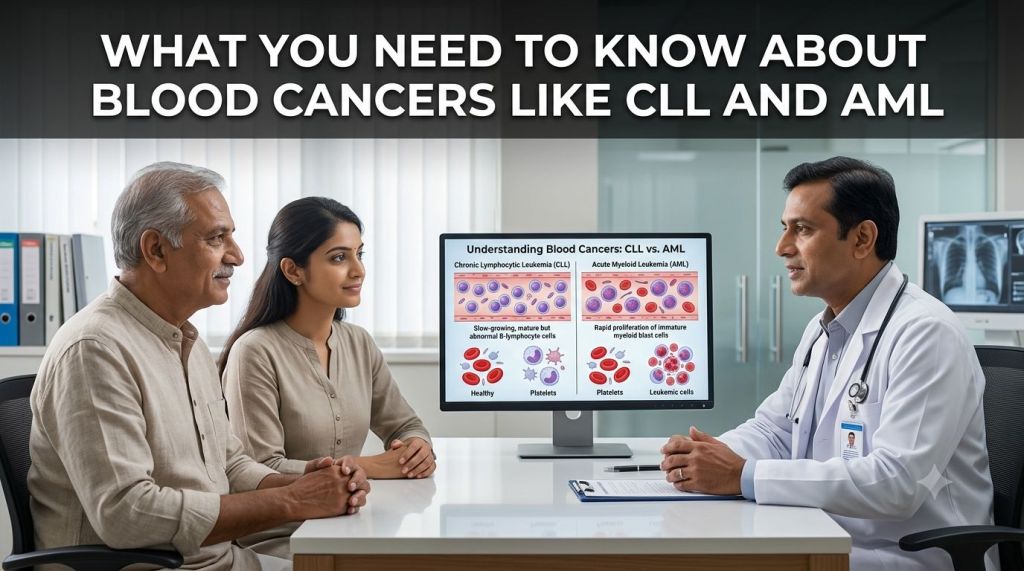
Hearing the words “blood cancer” can be frightening, especially when the diagnosis is chronic lymphocytic leukaemia (CLL) or acute myeloid leukaemia (AML). The names alone can be difficult to make sense of, and people often have questions about what the diagnosis means and what happens next.
CLL and AML are both types of leukaemia, but they are different diseases. Understanding their differences can make the diagnosis and the information that follows easier to understand.
Key Takeaways
- CLL and AML are both blood cancers, but they affect different types of blood cells.
- CLL usually develops slowly, while AML tends to progress more quickly.
- CLL may cause no symptoms when it is first discovered.
- Blood tests are important for diagnosing both cancers, with AML usually requiring additional bone marrow testing.
- Treatment is based on the type of leukaemia and the person’s individual circumstances.
What Are CLL and AML?
Both cancers begin in the tissues that make blood cells, mainly the bone marrow. The main difference is which blood cell becomes abnormal.
CLL affects lymphocytes, a type of white blood cell that helps the immune system fight infections. The abnormal cells gradually build up in the blood, bone marrow and sometimes the lymph nodes or spleen.
AML affects immature cells that normally develop into several types of blood cells. Abnormal cells build up in the bone marrow and interfere with the production of healthy blood cells.
| CLL | AML | |
| Full name | Chronic lymphocytic leukaemia | Acute myeloid leukaemia |
| Cells affected | Lymphocytes | Immature myeloid cells |
| Typical course | Usually develops slowly | Usually progresses quickly |
| How it may be found | Sometimes during a routine blood test | Often after symptoms or abnormal blood counts lead to further testing |
| Treatment timing | Some people can be monitored before treatment | Treatment is generally needed soon after diagnosis |
Symptoms to Watch For
CLL can be difficult to notice at first. Some people have no obvious symptoms and only find out after a routine blood test. When symptoms do develop, they may include:
- Swollen lymph nodes
- Ongoing tiredness or weakness
- Frequent infections or fever
- Unexplained weight loss
- Night sweats
- Easy bruising or bleeding
- A feeling of fullness below the ribs from an enlarged spleen
With AML, symptoms often appear over a shorter period. Tiredness, fever, repeated infections, pale skin, bruising and unusual bleeding can occur as healthy blood-cell production is affected.
These symptoms can have many causes, so having them does not necessarily mean someone has leukaemia. A healthcare professional should assess persistent or unexplained symptoms.
How Are CLL and AML Diagnosed?
A complete blood count (CBC) is often one of the first tests when leukaemia is suspected. It can show unusual levels of white blood cells, red blood cells or platelets.
For CLL, doctors examine the blood for abnormal lymphocytes and may use flow cytometry to identify their characteristics. Further tests can provide more information about the disease.
AML usually requires blood and bone marrow testing. Doctors examine the abnormal cells and may carry out genetic and molecular tests to identify the type of AML.
These investigations help confirm the diagnosis and give doctors the information they need to choose an appropriate treatment.
Treatment for CLL and AML
Treatment is different for CLL and AML. With CLL, treatment may not be needed straight away. Some people are monitored through regular check-ups until the disease causes symptoms or shows signs of becoming more active. When treatment is needed, options include targeted medicines and other therapies.
AML generally requires treatment soon after diagnosis. Depending on the type of AML and the person’s health, this may involve chemotherapy, targeted medicines, lower-intensity treatment or a stem cell transplant.
Venetoclax is one targeted medicine used in certain treatment settings for both CLL and AML. It blocks BCL-2, a protein that helps some cancer cells survive. Its use and treatment combinations differ between the two cancers. Venclexta 100mg is one prescription medicine containing venetoclax.
Treatments depend on the specific type of leukaemia, test results and the person’s circumstances.
Living With CLL or AML
The experience after diagnosis can vary considerably. Some people with CLL may have regular check-ups for years without needing treatment. Others may eventually need medicines as the disease becomes more active.
AML can involve a more intensive treatment period, particularly at the beginning. Care often includes frequent blood tests and follow-up appointments.
There is also the practical side of managing cancer. Keeping track of appointments, taking medicines as prescribed and reporting new symptoms can help patients stay on top of their care. Support from family, friends or a counsellor can also be valuable when treatment becomes difficult or uncertain.
Understanding the diagnosis is often the first step towards feeling more prepared for what comes next.
Disclaimer: This article is for general educational purposes and is not a substitute for professional medical advice, diagnosis or treatment. Anyone diagnosed with CLL, AML or another blood cancer should discuss their treatment options with a qualified healthcare professional.


Leave a comment