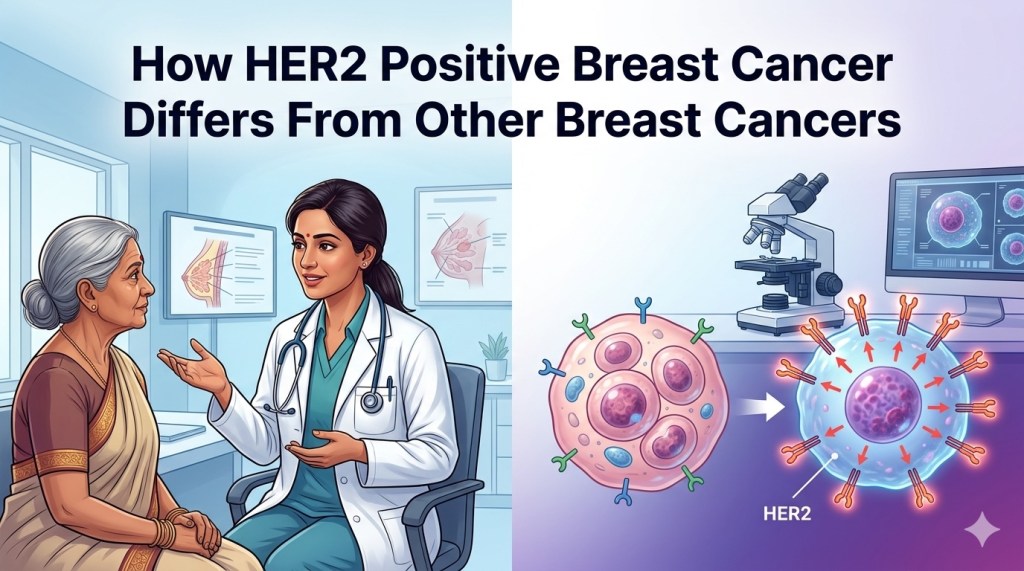
HER2-positive breast cancer is a type of breast cancer that develops at a much quicker rate than most other types of breast cancer due to increased activity of the HER2 protein. Because of its aggressive nature, patients have significantly improved outcomes with targeted therapies. Understanding the differences between HER2-positive breast cancer and other forms of breast cancer can help patients understand the importance of early detection and an appropriate treatment plan.
Breast cancer that is HER2 positive differs from other types of breast cancer because it can grow and spread faster than other types of breast cancer. This is because cancer cells produce excess HER2 protein, which creates a stronger growth signal.
Despite its aggressive nature, many patients with HER2-positive breast cancer will benefit from having access to targeted therapies that have improved overall outcomes. By learning about these differences, patients can see how critical it is to receive a prompt diagnosis and appropriate treatment for this type of cancer.
What Is HER2 Positive Breast Cancer?
HER2-positive breast cancer refers to breast cancer that produces excess amounts of HER2 protein within the cancer cells. While HER2 proteins stimulate breast cells to multiply, overproducing HER2 causes cancer cells to proliferate more rapidly than normal cells.
Doctors will determine a tumour’s HER2 status by testing it. Once the HER2 status has been determined, it helps guide them in selecting an appropriate course of treatment for their patient. Targeted treatment may be available for individuals with HER2-positive breast cancer.
- Excess HER2 produced by cancer cells
- HER2 stimulates cell growth
- HER2 testing allows care providers to establish HER2 status
- Rapid detection allows for an earlier start of treatment
How Is HER2-Positive Breast Cancer Different From Other Types?
Breast cancer that is HER2 positive grows more quickly than almost every other type of breast cancer. The reason it might spread more quickly than other types is that the HER2 protein provides powerful growth signals to cancer cells.
Some types of breast cancer primarily respond to hormone therapy only, but HER2-positive breast cancer will often need specific medications to help create a better response.
HER2-positive breast cancer :
- Faster-growing cancer
- Spread earlier
- HER2 provides growth signals to cells
- A different treatment strategy
Why Does HER2-Positive Breast Cancer Grow Faster?
HER2, a protein present in breast tissue, helps regulate cellular mitosis (the process by which a cell divides into two identical cells) and cell growth. In cases of excess HER2 protein, this provides cancer cells with a stronger signal to undergo rapid cellular replication, ultimately resulting in faster-growing tumours.
The use of targeted therapies is intended to obstruct this process of abnormal cellular growth.
- HER2 provides a signal to promote cellular growth
- A higher amount of HER2 promotes rapid mitosis
- Tumour(s) may grow rapidly if there are excessive amounts of HER2 present
- Using medicines will ultimately slow down the rate of progression of cancer.
How Do Medications Help?
Enhertu 100mg, containing trastuzumab deruxtecan, is a targeted therapy that binds HER-2 receptors on cancer cells. After binding, it ensures the medicine reaches the cancer cell directly and destroys it with minimal injury to surrounding healthy cells.
It will increase treatment precision and enhance how well the disease is managed in people with HER2-positive breast cancer.
- Targeting HER-2 protein
- Delivering treatment to cancer cells
- Helping to destroy the cancer cells
- Minimising Injury To Healthy Cells
- Improving Treatment Precision
Why Is Early Diagnosis Important?
An early diagnosis is critical because HER2+ breast cancer can progress rapidly without treatment, and treating the cancer with a targeted treatment while it is in the early stages. This can enable patients to receive medications at the appropriate time.
- Makes it possible for patients to receive treatment before their cancer has progressed.
- Allows patients to receive treatment sooner than if they waited until their tumours were larger.
- Provides a better chance of a successful treatment response.
- Helps in making decisions about the best treatments for patients.
What Treatment Options Are Available?
HER2-positive breast cancer can be treated with surgery, chemotherapy, and targeted therapies, depending on the disease’s size and location and the patient’s physical condition. Doctors will select the best treatment for each patient based on their individual needs.
Targeted treatments can increase the likelihood of success with other therapies by improving response rates.
Many types of breast cancer are treated with surgery to remove tumours; however, some patients may also receive chemotherapy in order to lessen the number of remaining cancer cells. By combining these therapies, healthcare providers hope to achieve better, longer-lasting outcomes in a patient’s treatment plan.
How Can Patients Support Their Treatment Journey?
Patients can aid their treatment by attending scheduled appointments, adhering to prescribed treatments, and reporting any unexpected or early symptoms so they can be addressed promptly. Additionally, educating yourself about the condition will help better prepare you during your treatment.
Patients receiving medications must remain in contact with their healthcare providers to ensure proper monitoring.
- Regular Review
- Adhere to the Treatment Plan
- Report Symptoms Promptly
- Educate Yourself About Your Treatment
- Maintain Contact with Your Medical Provider
Final Thought
HER2-positive breast cancer grows faster than many other breast cancers, but early diagnosis and targeted treatment have improved outcomes for many patients. Treatments help control the disease more effectively. With the right care plan, patients can better manage their treatment and improve their long-term outlook.
Disclaimer: This article is for general informational purposes only. It is not a substitute for professional medical advice, diagnosis, or treatment. Always consult your healthcare provider for diagnosis and treatment advice. MrMed does not endorse any specific treatment unless clearly stated.


Leave a comment